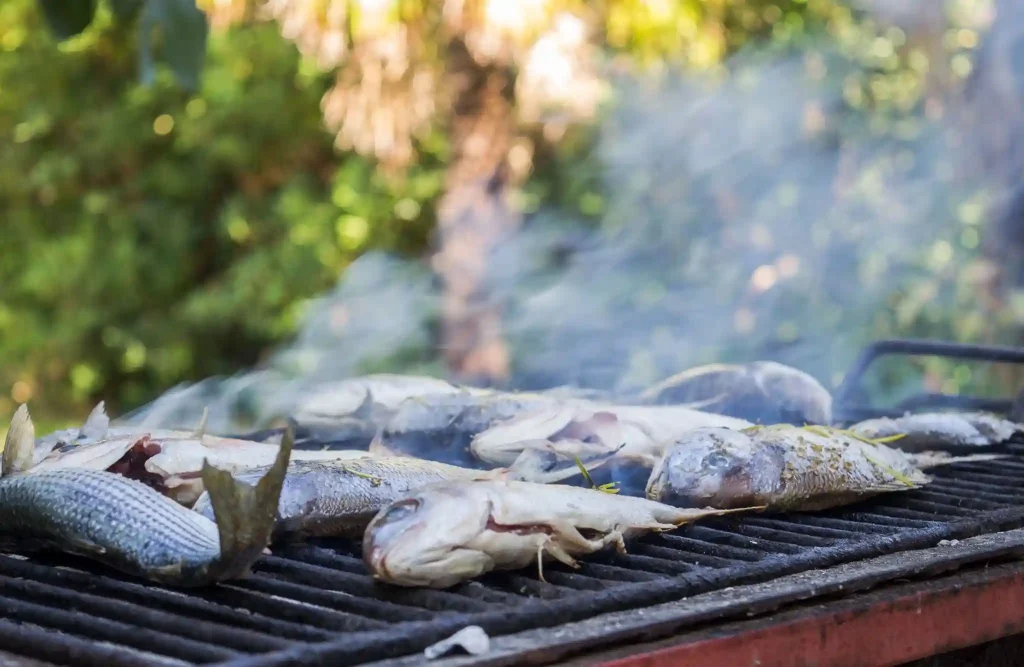
There is a moment at the grill that every cook who has grilled fish successfully knows and every cook who has not yet mastered it is working toward. The fish has been on the grate for the right amount of time. The heat has done its work. You slide the spatula underneath and the flesh releases cleanly, completely, with those precise caramelized marks pressed into the surface and the skin crisped to a delicate crackle that makes a sound when you press it. The natural oils have rendered in the heat and the aroma coming off the grill is something between the sea and a wood fire and a restaurant kitchen operating at its best. This is grilled fish done right. And it is one of the most rewarding experiences available to anyone who cooks outdoors. The other experience, the one that happens when the wrong fish meets a grill or the right fish meets wrong technique, is the reason so many home cooks avoid grilling fish entirely. The flesh sticks to the grate and tears when you try to turn it. The delicate fillet falls apart and through the grates in pieces that the fire claims before the plate does.
Why Fish Selection Makes or Breaks the Grilling Experience
The Science of Fat Content Flesh Density and Grill Compatibility
Not all fish are created equal when it comes to grilling and the specific characteristics that determine whether a fish will grill successfully are definable, measurable and worth understanding before you ever visit the fish counter. The two most important variables are flesh density and fat content. Dense, firm-fleshed fish with a compact muscle structure hold together on the grill because the proteins in their flesh are tightly bound enough to withstand the direct heat, the spatula and the turning process without disintegrating. Fat content is the second critical variable because intramuscular fat acts as a natural basting mechanism during grilling, keeping the flesh moist as the exterior cooks and providing the caloric richness that produces the flavor depth associated with the best grilled fish.
Firm Fleshed Fish That Were Born to Meet a Grill
Swordfish and Tuna – The Steak-Like Champions of the Grill
Swordfish and tuna occupy the apex of the fish for grilling hierarchy for a reason that every grill cook quickly discovers the first time they work with them. Their flesh is dense enough and their muscle structure compact enough that they behave on the grill more like a beef steak than like a conventional fish fillet, which means they can be handled with the same confidence and the same direct, high-heat technique that produces perfect grill marks on red meat. Swordfish steaks cut to an inch and a half thickness are the ideal format for grill work because the thickness allows the development of a caramelized exterior with those coveted grill marks while the center reaches the medium texture that swordfish is best enjoyed at without overcooking. Swordfish is mild enough to take robust marinades without its natural flavor being overwhelmed and its firm texture means that the marinade penetrates the surface layers without turning the flesh mushy the way acidic marinades can affect more delicate fish.
Salmon and Its Perfect Balance of Fat and Firmness
Salmon is the fish for grilling that most home cooks encounter first and master most reliably because its combination of firm flesh and high fat content produces a degree of grilling forgiveness that most other species cannot match. The intramuscular fat of salmon, which appears as the white striations running through the pink flesh, renders during grilling in a way that continuously bastes the flesh from within, making it significantly more difficult to dry out than leaner fish even when the timing is slightly longer than optimal. Salmon fillets should be grilled skin side down for the majority of their cooking time, typically five to seven minutes on a properly preheated grill for a standard inch-thick fillet, with a brief one to two minute turn for the flesh side only at the end. The skin protects the delicate lower layer of flesh from direct heat during the majority of cooking and when it has crisped and the flesh is opaque two-thirds of the way through the fillet, the fish is typically at the perfect moment for the brief final sear on the flesh side.
White Fish That Grill Beautifully With the Right Technique
Sea Bass and Sea Bream – Mediterranean Grilling at Its Finest
Sea bass and sea bream are the fish for grilling that the Mediterranean culinary tradition has refined over centuries and whose treatment on the grill in Greek tavernas, Spanish chiringuitos and Italian seafood restaurants represents some of the finest simple grilling in the world. Both fish have moderately firm flesh with enough fat content to maintain moisture during grilling and skin that crisps beautifully when the grill temperature and the fish preparation are correct. The key to grilling sea bass and sea bream successfully is scoring the skin with three diagonal cuts on each side before grilling, which allows heat to penetrate the flesh more evenly, prevents the skin from buckling as it contracts in the heat and provides additional surface area for the crispy skin development that is one of the signature pleasures of these fish grilled whole.
Halibut and Mahi-Mahi for Clean Delicate Grilled Flavor
Halibut and mahi-mahi represent the higher end of the white fish grilling spectrum, both offering the clean, sweet flesh and the firm enough texture to handle direct grill heat when the preparation is correct. Halibut is the leaner of the two and consequently the less forgiving, because its low fat content means that overcooking by even a minute or two produces dry, flaking flesh that loses the sweet, clean flavor that makes fresh halibut exceptional. The solution for grilling halibut is a combination of thicker cut portions, at least an inch and a quarter, a well-oiled and properly preheated grill and attentive timing that pulls the fish from the heat when it is just barely opaque through the center. Mahi-mahi has a slightly firmer and more textured flesh than halibut with a mild sweetness that takes tropical marinades beautifully. I
Whole Fish Grilling and Why It Produces the Best Results
The Case for Grilling Fish Whole and How to Do It Confidently
Grilling fish whole is the technique that produces the most flavorful results of any fish for grilling preparation method and the one that most home grillers approach with unnecessary apprehension. The bone structure of a whole fish acts as a natural heat diffuser that slows the cooking process slightly and distributes heat more evenly through the flesh than a boneless fillet allows, producing flesh that is consistently moist from the collar to the tail in a way that fillets rarely achieve. The cavity of the whole fish provides the opportunity for flavoring from within, which is the preparation secret of the best Mediterranean grilled fish. A whole sea bass or red snapper stuffed with sliced lemon, fresh herbs including thyme and rosemary, crushed garlic and a drizzle of olive oil is seasoned from both inside and outside simultaneously during grilling, producing a depth of flavor that no surface marinade alone can replicate.
Marinades Seasoning and Preparation That Elevate Grilled Fish
What to Put on Fish Before the Grill and What to Avoid
The seasoning and marinade decisions made before fish meets grill are as consequential for the final result as the grilling technique itself and the most important principle governing both is restraint. The natural flavor of fresh, high-quality fish is one of the most delicate and most rewarding flavors in all of cookery and the primary role of seasoning and marinade should be to amplify and complement rather than to transform or overwhelm it. Oil is the most important pre-grill application for any fish because it creates the barrier between the fish protein and the grill grate that prevents sticking, promotes even browning and adds richness to the final result. Extra virgin olive oil for Mediterranean preparations, neutral avocado oil for Asian-influenced preparations and sesame oil as a finishing element rather than a cooking medium are the oil choices that most consistently produce excellent grilled fish results.
Conclusion
Grilling fish is one of the most rewarding skills in outdoor cooking and one of the most straightforwardly healthy ways to feed people you love in summer. The right fish makes the technique easier and the result better. Swordfish and tuna for the confidence of steak-like handling. Salmon for the forgiveness of high fat content. Sea bass and sea bream whole for the Mediterranean flavor depth that no other preparation produces. And the specific techniques, the properly preheated grate, the patience to let the fish release naturally and the wide spatula ready at the right moment, transform what seems like a high-risk proposition into one of the most reliably spectacular things that happens at a well-run grill. Choose the right fish. Prepare it simply. Trust the heat. And let the grill do what it does best.